
A well-designed pantry is not just about how it looks—it directly affects how easily you can store, find, and use your food. Many pantries fail because they are either overfilled, poorly structured, or designed without daily use in mind.
These pantry design ideas focus on creating a space that feels organized, efficient, and easy to maintain, whether you have a walk-in pantry or a small cabinet setup.
1. Design Based on Zones, Not Just Shelves
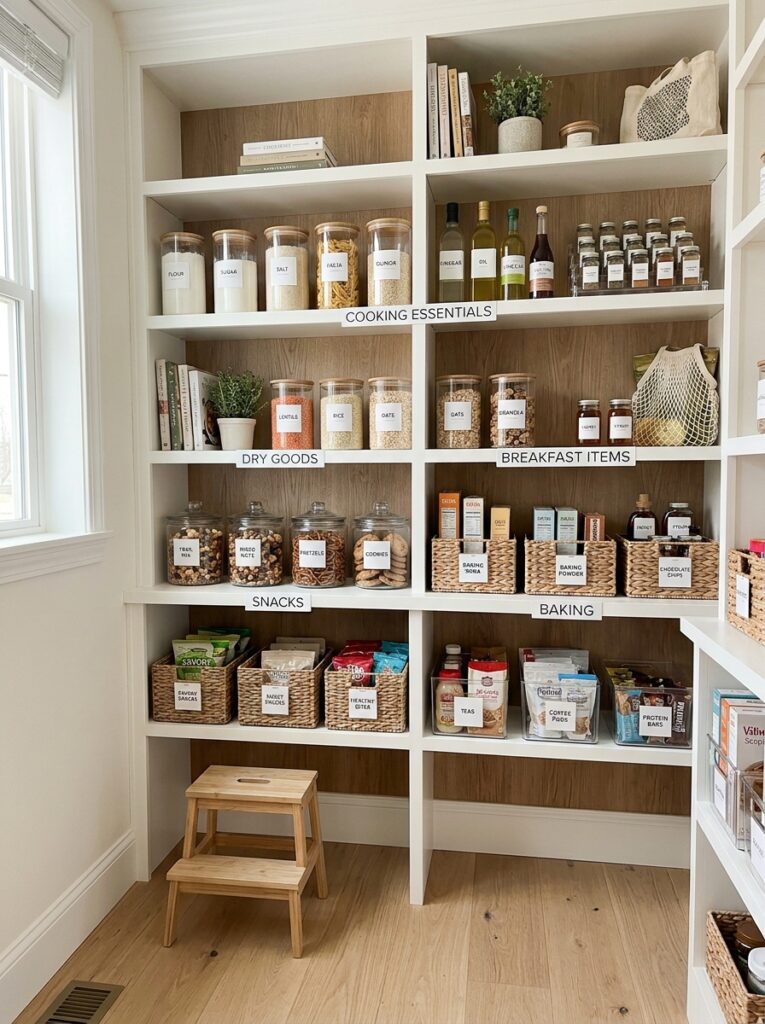
Most pantries are arranged randomly, which leads to clutter.
Instead, divide your pantry into zones:
- Daily-use items
- Snacks
- Dry goods
- Cooking essentials
This approach makes everything predictable and reduces the time spent searching.
2. Use Adjustable Shelving for Flexibility
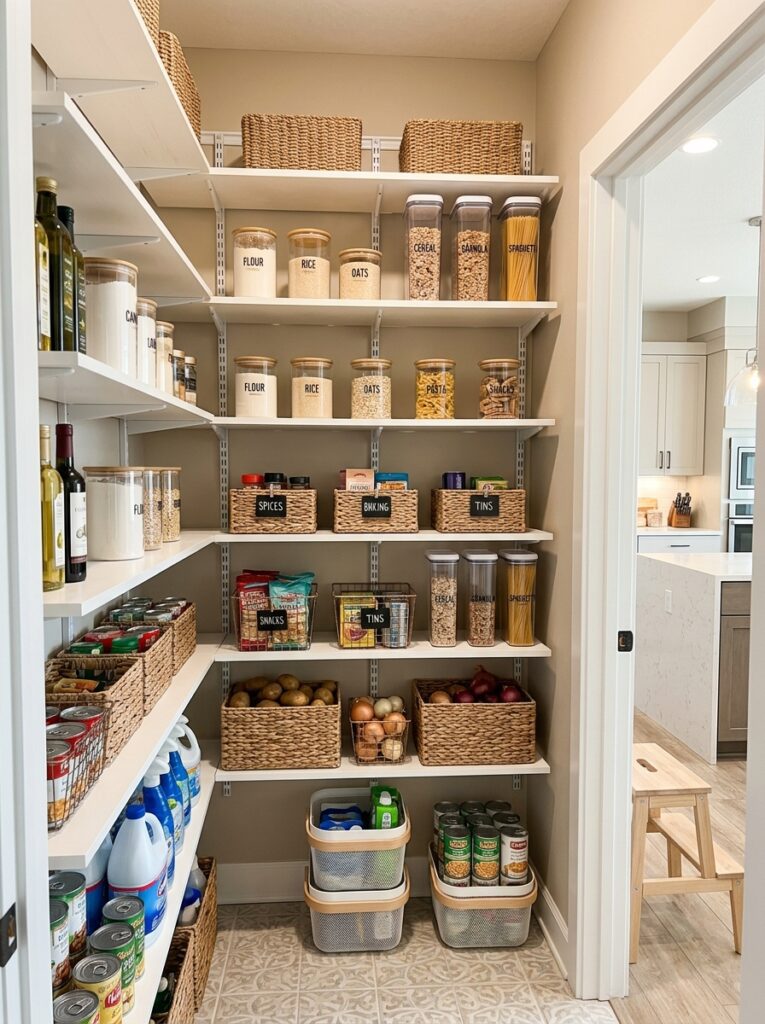
Fixed shelves limit how you use your space.
Adjustable shelving allows you to:
- Change heights based on items
- Avoid wasted vertical space
- Adapt as your storage needs change
This is especially useful for bulk items or taller containers.
3. Keep Eye-Level Storage for Daily Items
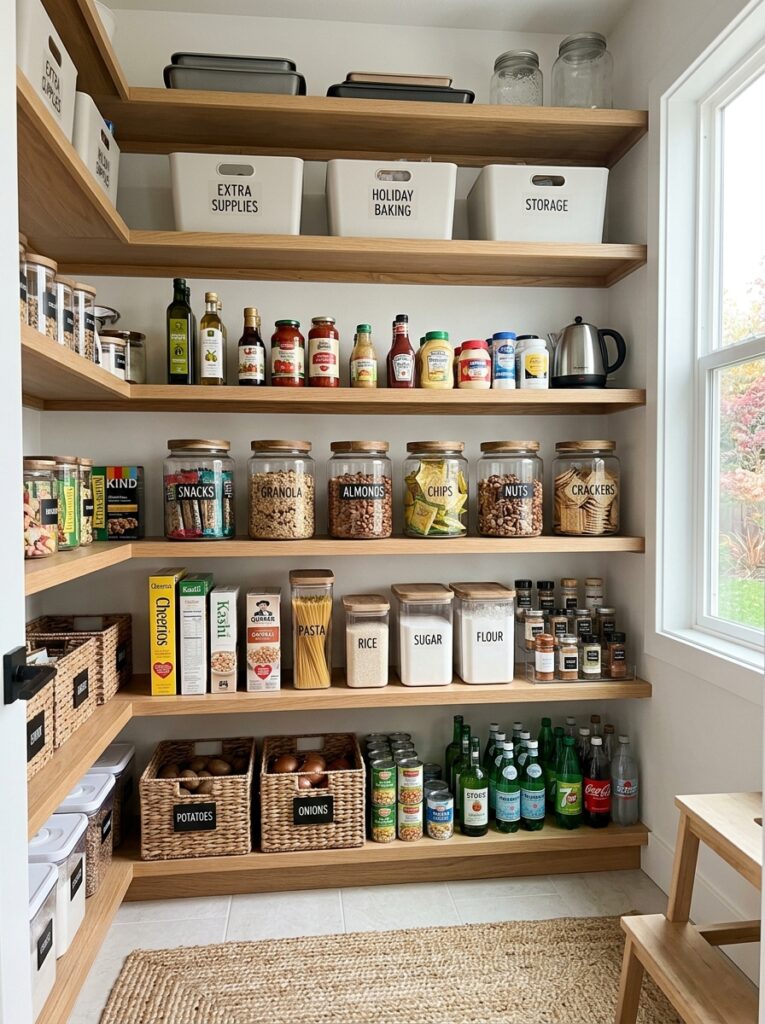
Placement matters more than most people realize.
Store frequently used items at eye level:
- Snacks
- Breakfast items
- Everyday ingredients
Less-used items can go higher or lower. This improves daily efficiency without changing the layout.
4. Combine Open and Closed Storage
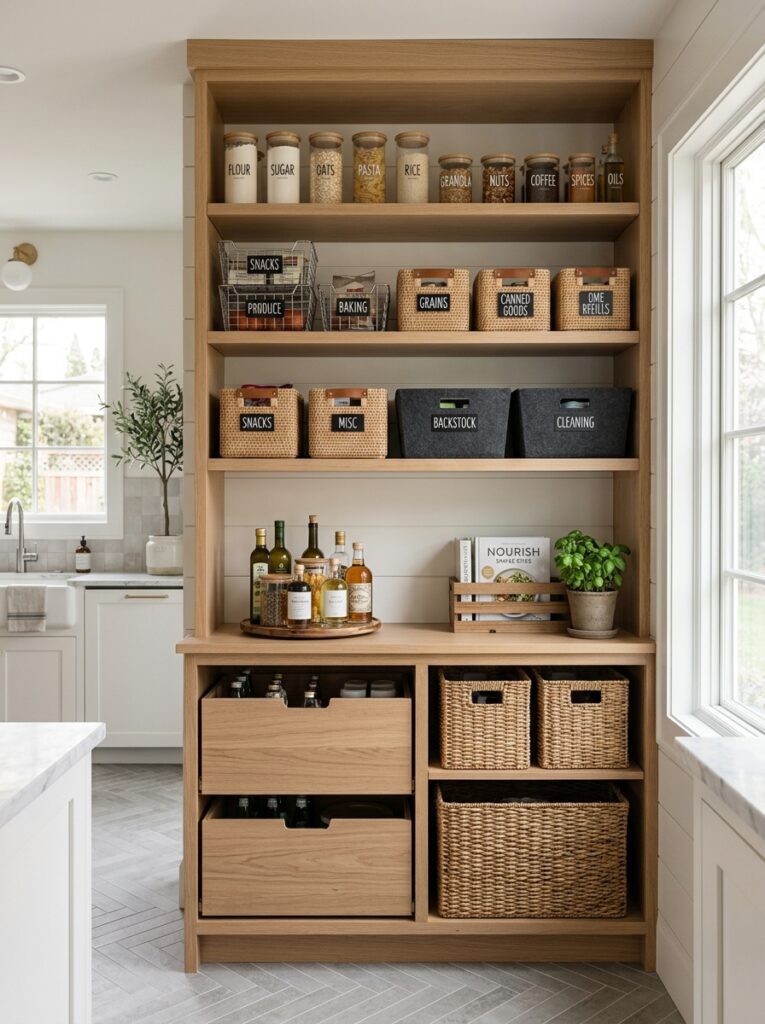
A fully open pantry can look cluttered, while fully closed storage hides everything.
Use a mix:
- Open shelves for frequently used items
- Bins or containers for loose items
This keeps the pantry both functional and visually clean.
5. Use Uniform Containers to Reduce Visual Clutter
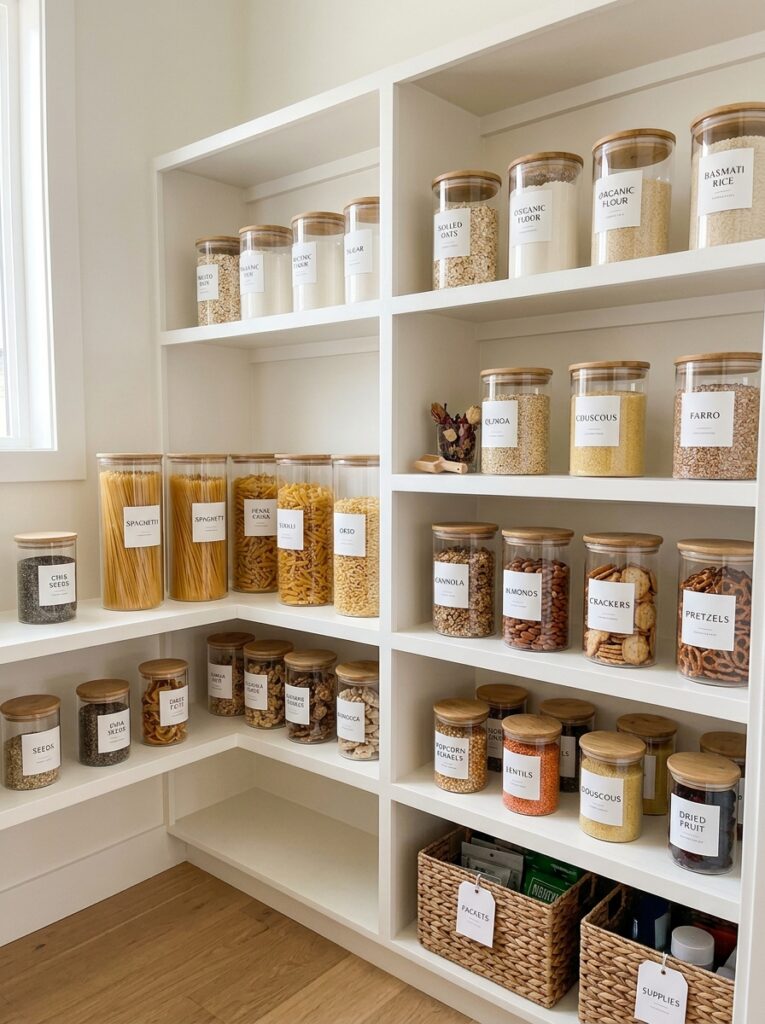
Different packaging creates visual noise.
Switching to uniform containers:
- Makes shelves look organized
- Saves space through better stacking
- Improves visibility of contents
This is one of the simplest design upgrades with a big impact.
6. Plan for Depth to Avoid Lost Items
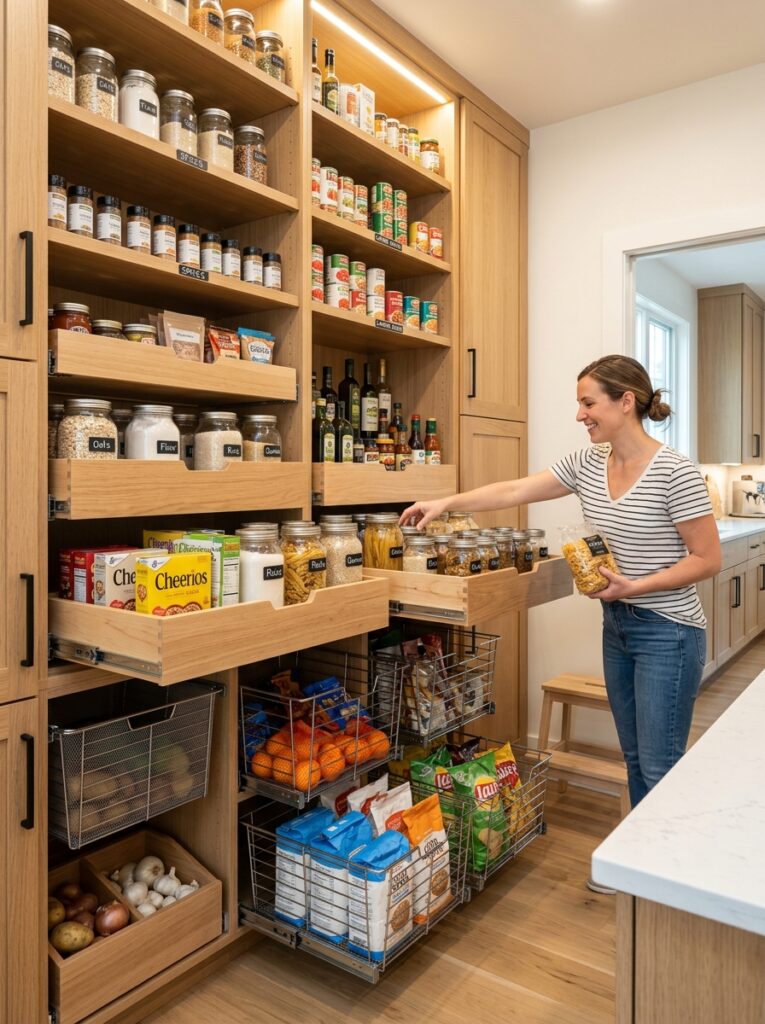
Deep shelves often cause items to disappear in the back.
To fix this:
- Use pull-out drawers or bins
- Keep smaller items in front
- Avoid overstacking
A good pantry design ensures everything is visible and reachable.
7. Add Vertical Dividers for Specific Items
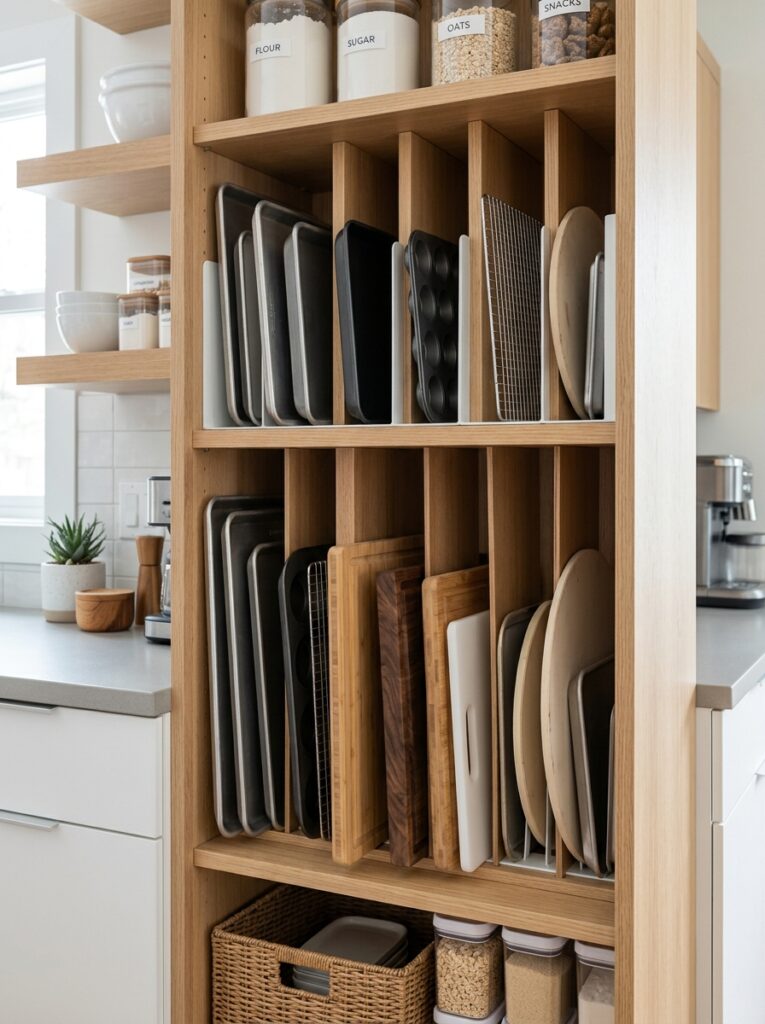
Flat storage doesn’t work for everything.
Use vertical dividers for:
- Baking sheets
- Cutting boards
- Trays
This prevents stacking issues and makes items easier to access.
8. Keep a Small “Active Use” Section
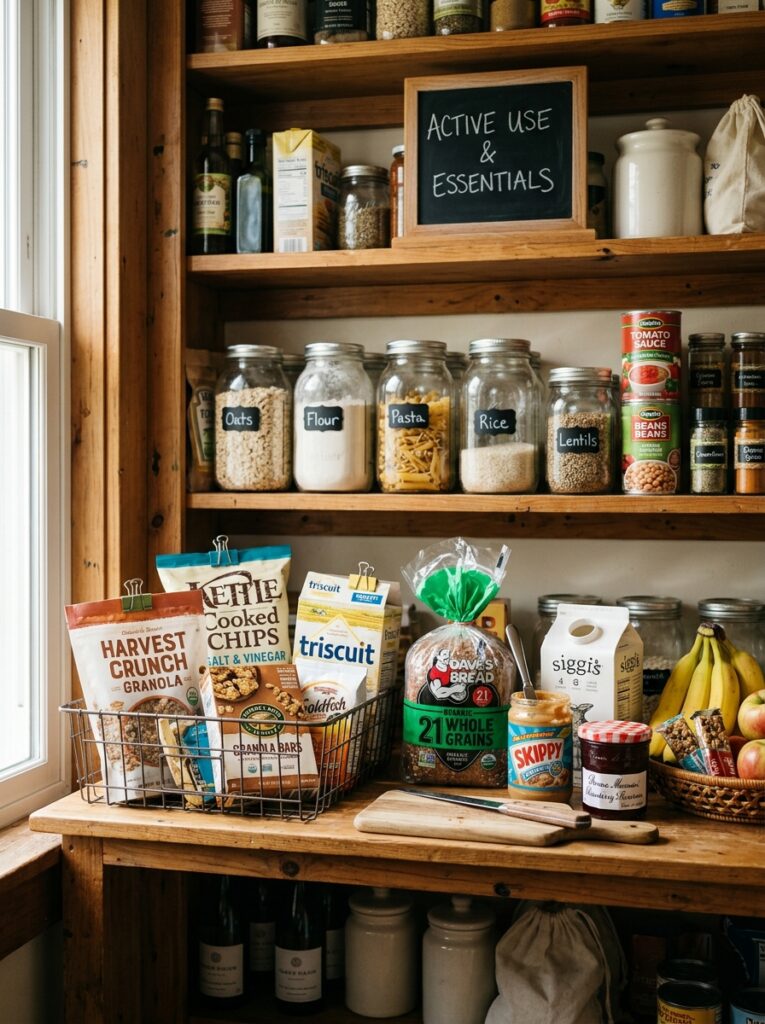
Not everything needs to be stored long-term.
Create a small section for:
- Items currently in use
- Open packages
- Weekly essentials
This keeps frequently handled items from disrupting the rest of the pantry.
9. Design for Maintenance, Not Just Setup
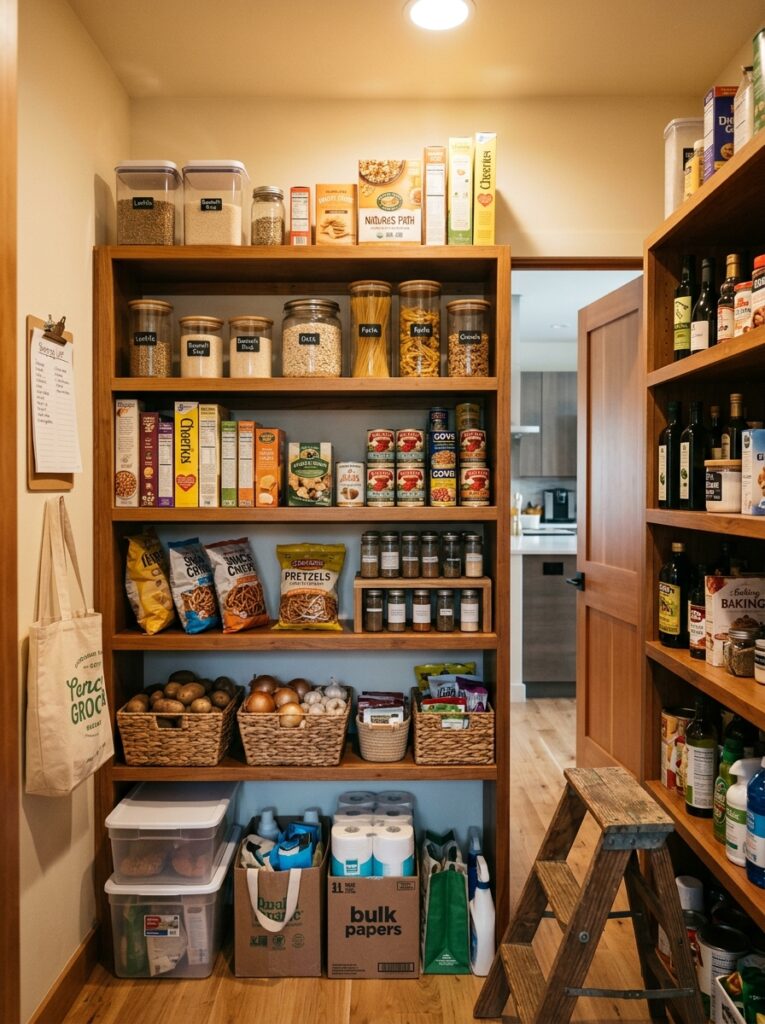
A pantry that looks good once but is hard to maintain will not stay organized.
Keep the design simple:
- Avoid overcomplicated systems
- Leave some empty space
- Make everything easy to return after use
The goal is to create a system that works daily, not just visually.
A Practical Way to Approach Pantry Design
Instead of trying to redesign everything at once, focus on improving how your pantry works step by step. Start by identifying what slows you down—whether it’s finding items, lack of space, or cluttered shelves. Then apply small changes like better grouping, improved placement, or simple storage tools.
A well-designed pantry is not defined by size or appearance. It’s defined by how easily it supports your daily routine.