
Small kitchens often feel limiting—but the right design choices can completely change how the space looks and works. These ideas focus on visual impact and smart layout, not just decoration.
1. Use Vertical Space Like a Design Feature
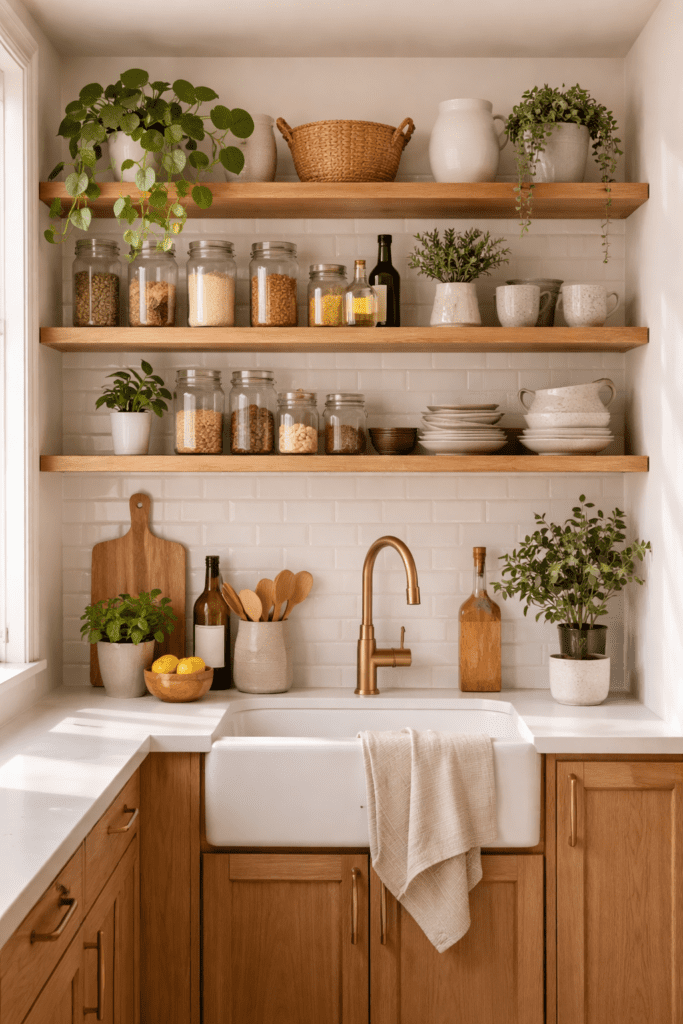
Most kitchens waste wall space. Instead of just adding cabinets, turn vertical storage into a visual element.
- Install floating shelves with intentional spacing
- Mix functional items with decor (jars, ceramics, plants)
- Keep it balanced—not overcrowded
This creates height and openness, making the kitchen feel larger.
2. Create a “Visual Anchor” Area
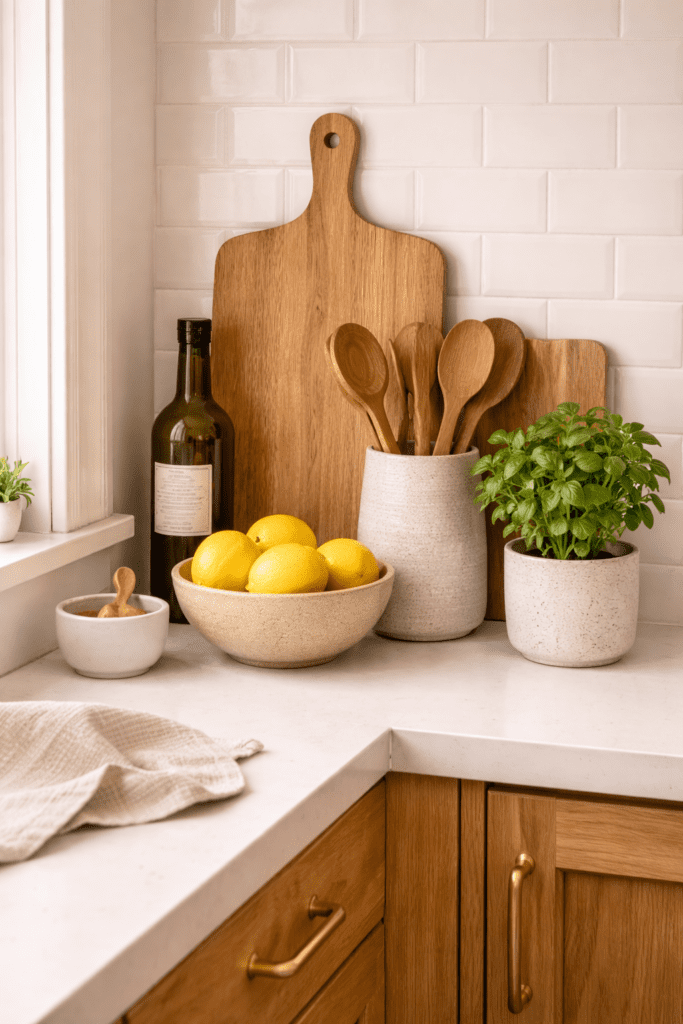
Every well-designed kitchen has one focal point.
- A styled countertop corner
- A statement backsplash
- A wooden prep station
This draws attention and makes the space feel intentional.
3. Layer Lighting Instead of One Source
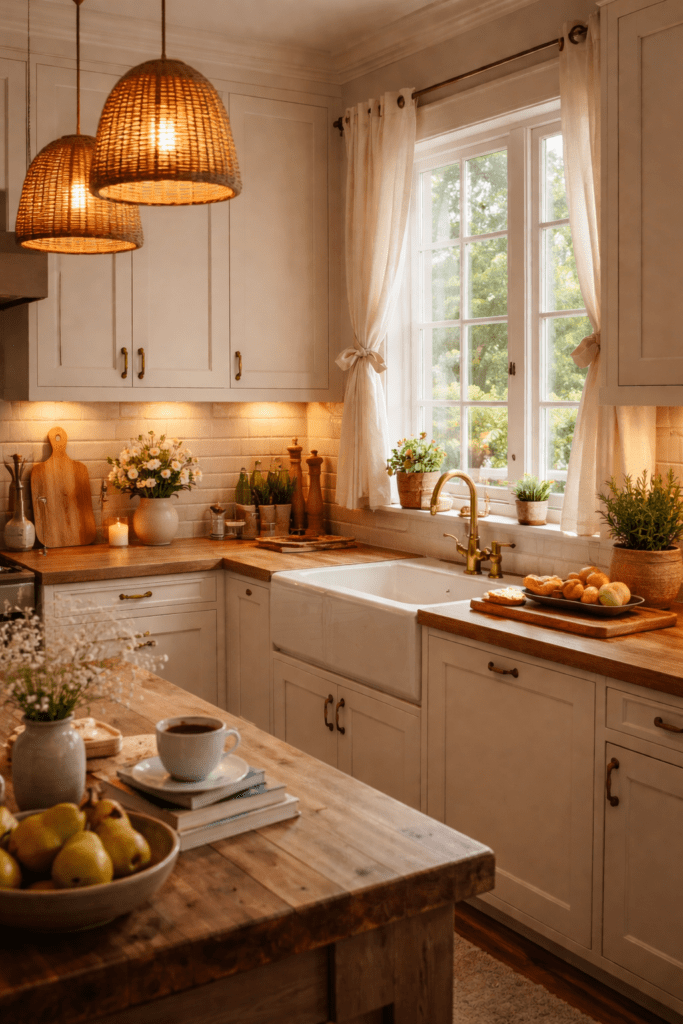
Most kitchens rely on a single overhead light.
Instead:
- Add under-cabinet lighting
- Use a small lamp or warm accent light
- Combine natural + warm lighting
This adds depth and changes the mood instantly
4. Use Fewer Colors, More Texture
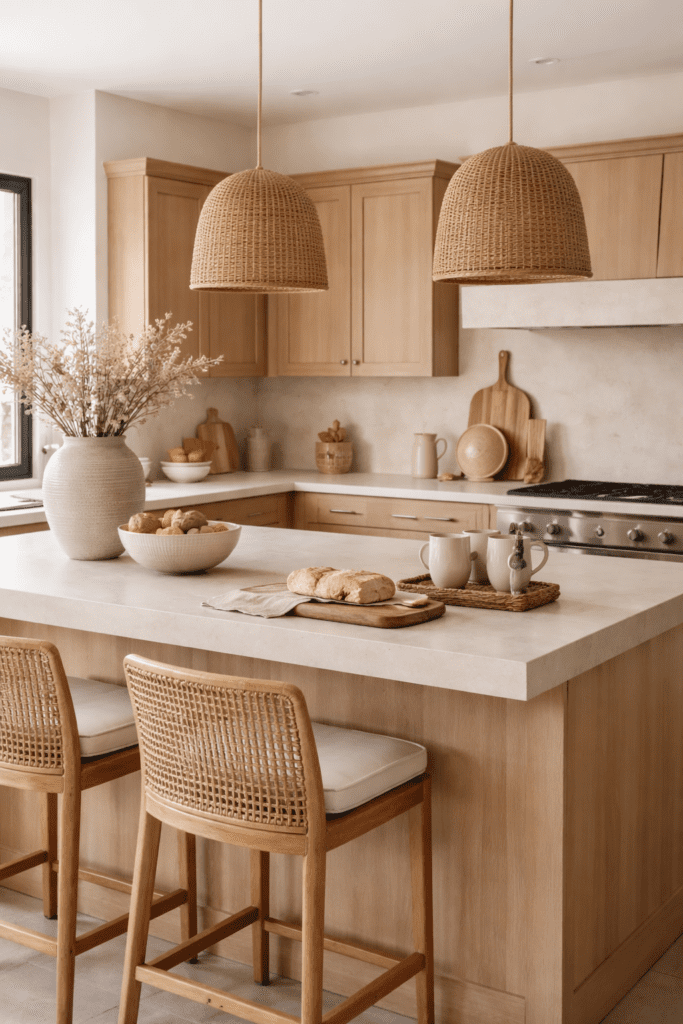
Too many colors make small kitchens feel chaotic.
Instead:
- Stick to 2–3 colors
- Add variation through textures (wood, ceramic, fabric)
This creates a calm, premium look
5. Make Open Space Part of the Design
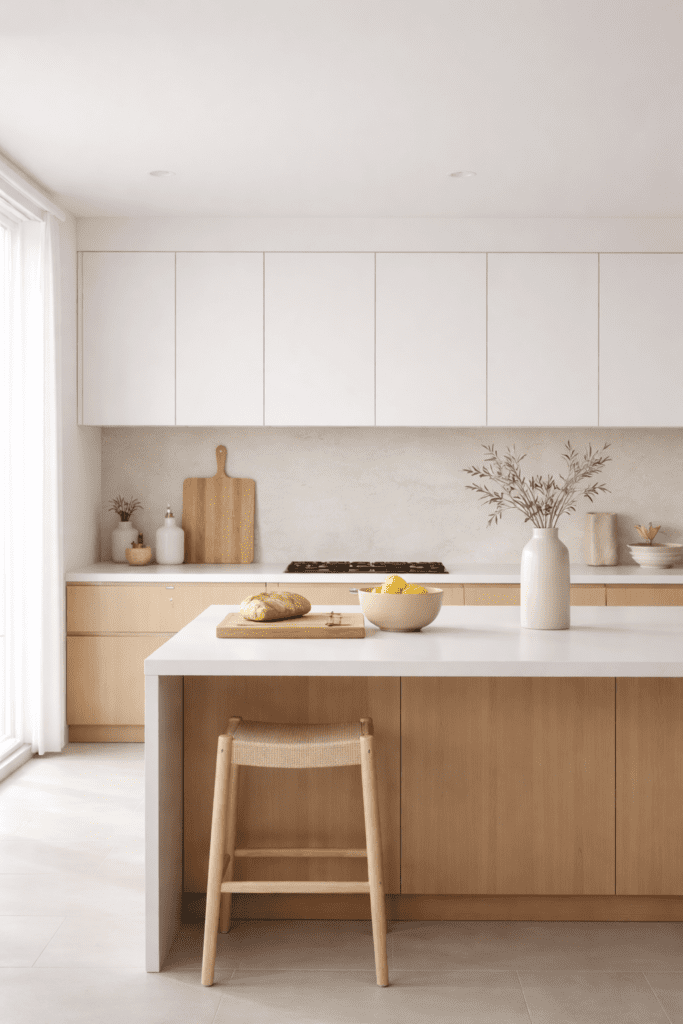
Don’t fill every corner.
- Leave breathing room on counters
- Avoid overcrowding shelves
- Let surfaces “rest”
Empty space = visual luxury
6. Add One Unexpected Element
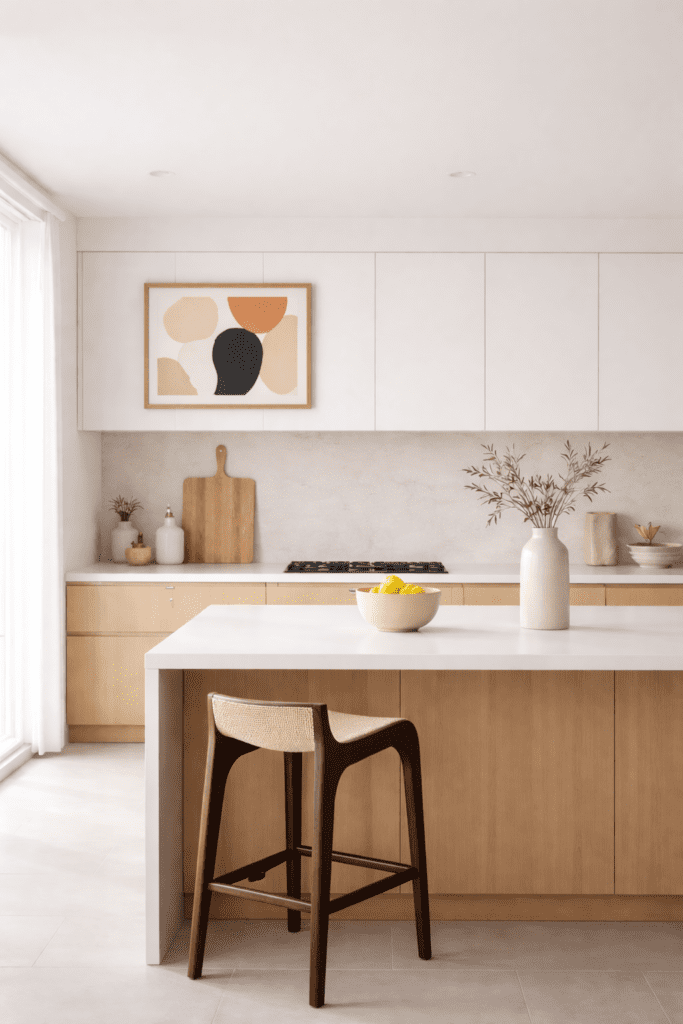
This is what separates basic from interesting.
Examples:
- A small artwork in the kitchen
- A unique light fixture
- A bold stool or chair
One unexpected detail = personality
7. Design for Everyday Use, Not Just Looks
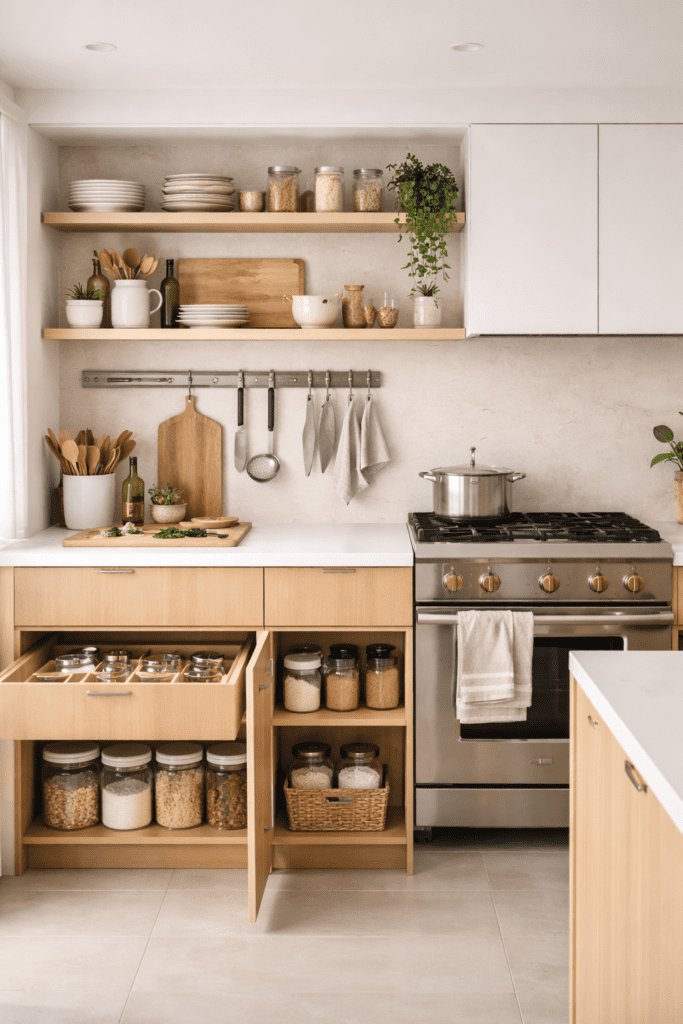
Aesthetic kitchens fail if they’re not practical.
- Keep frequently used items accessible
- Use smart storage
- Balance beauty + function
The best kitchens feel effortless to use.
Conclusion
Great kitchen design isn’t about adding more—it’s about making smarter choices. Even small changes can completely shift how the space feels and functions.