
A coastal living room is not about themed decor or obvious beach elements. The goal is to create a space that feels light, relaxed, and comfortable using simple materials, soft colors, and natural textures.
Many people overdo coastal design by adding too many decorative elements. A better approach is to focus on how the room feels—open, breathable, and easy to live in.
1. Start With a Light, Neutral Base
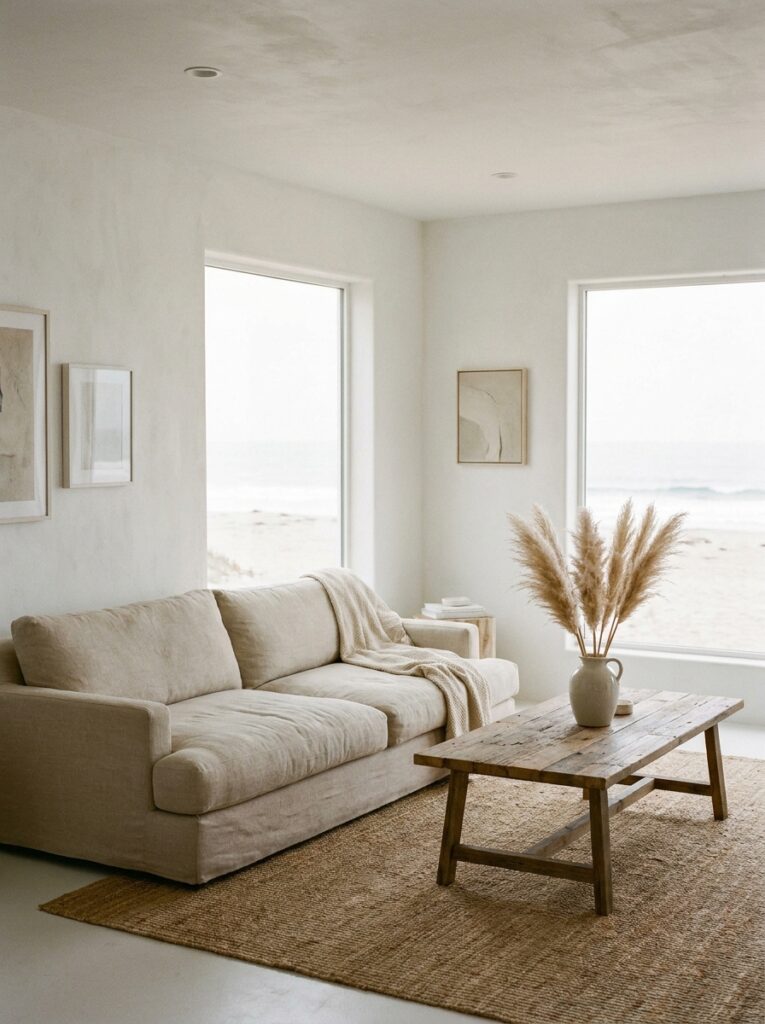
The foundation of a coastal living room is a soft, neutral palette.
- White, cream, or light beige walls
- Neutral sofas or large furniture pieces
This creates a bright and open feel, especially in smaller spaces. The lighter the base, the more flexible the rest of the design becomes.
2. Use Blue as an Accent, Not the Main Color
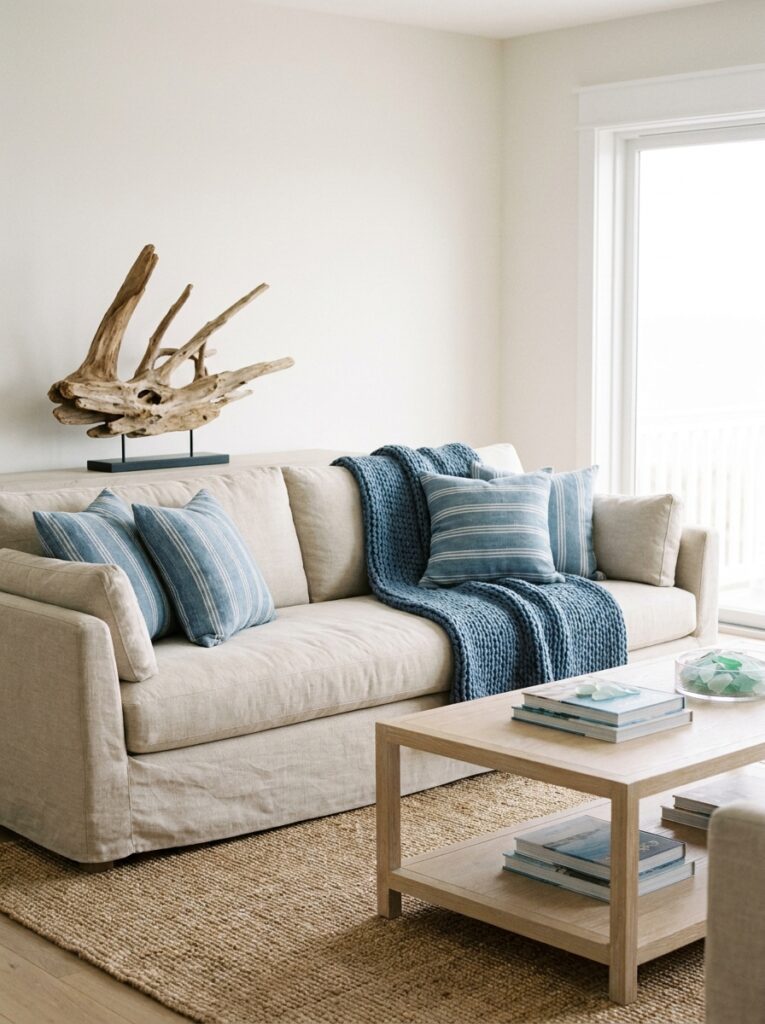
Blue is often associated with coastal design, but using too much can overwhelm the space.
Instead:
- Add blue through pillows, throws, or small decor
- Keep it subtle and balanced
This keeps the room feeling calm rather than themed.
3. Add Natural Textures for Warmth
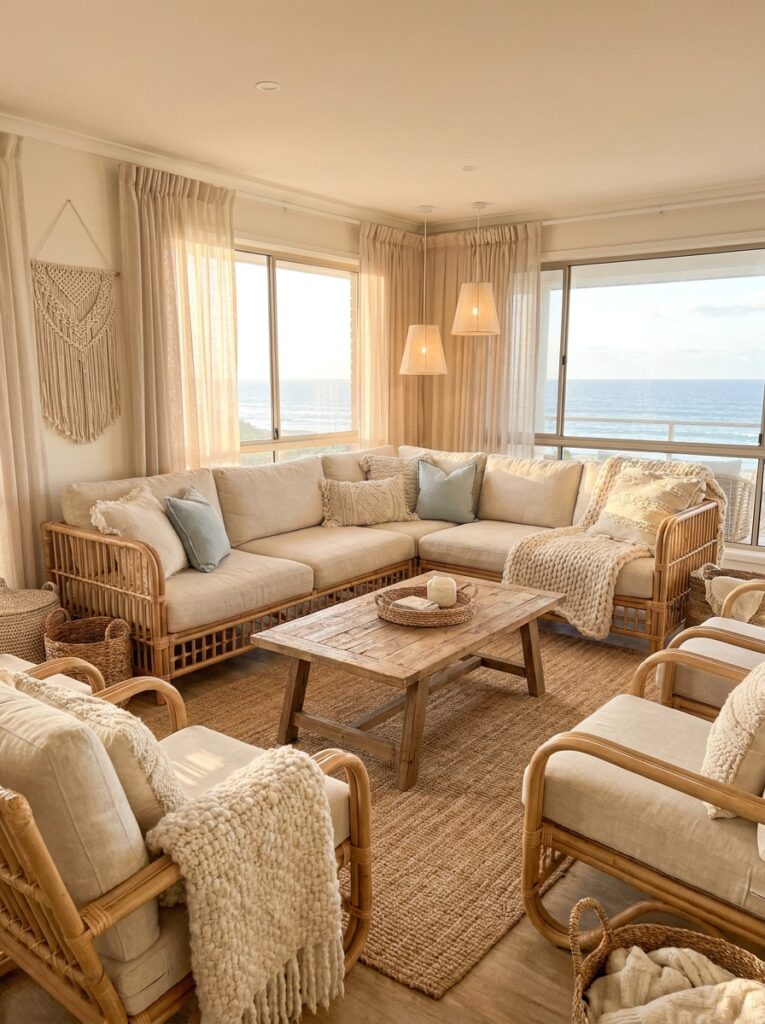
Coastal spaces rely on texture to avoid feeling flat.
Use materials like:
- Wood
- Rattan
- Woven fabrics
These elements bring warmth and help balance the lighter color palette.
4. Keep Furniture Simple and Comfortable
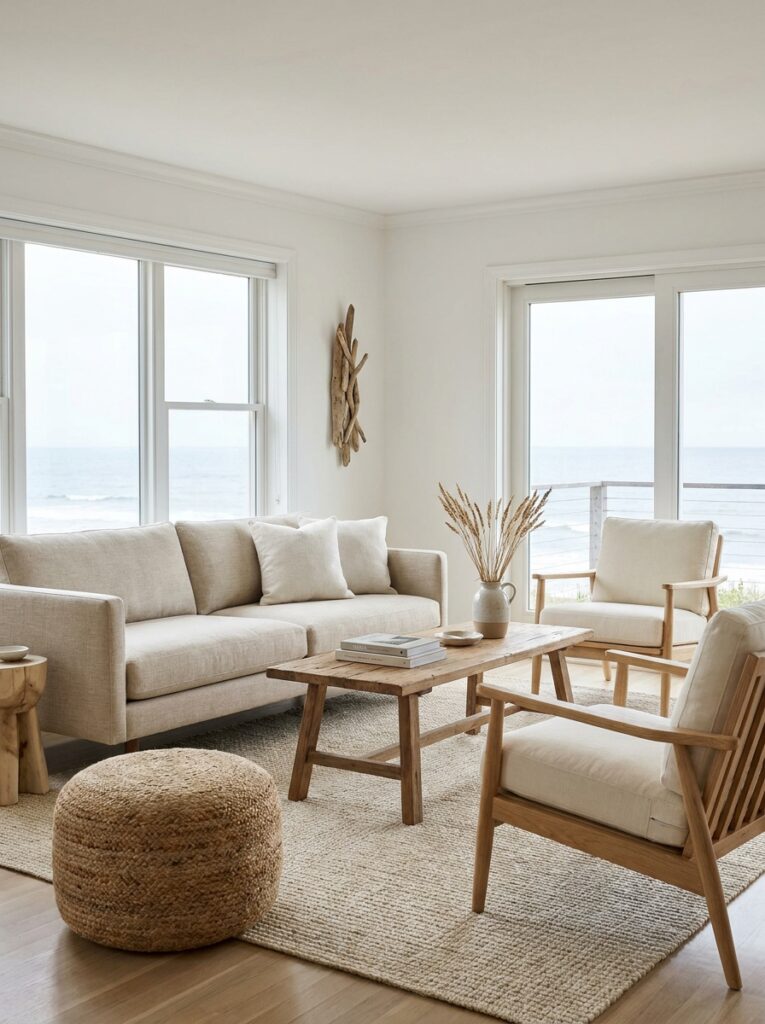
Avoid heavy or overly detailed furniture.
Choose:
- Clean lines
- Soft fabrics
- Comfortable seating
The focus should be on relaxation, not formality.
5. Let Natural Light Be a Key Feature
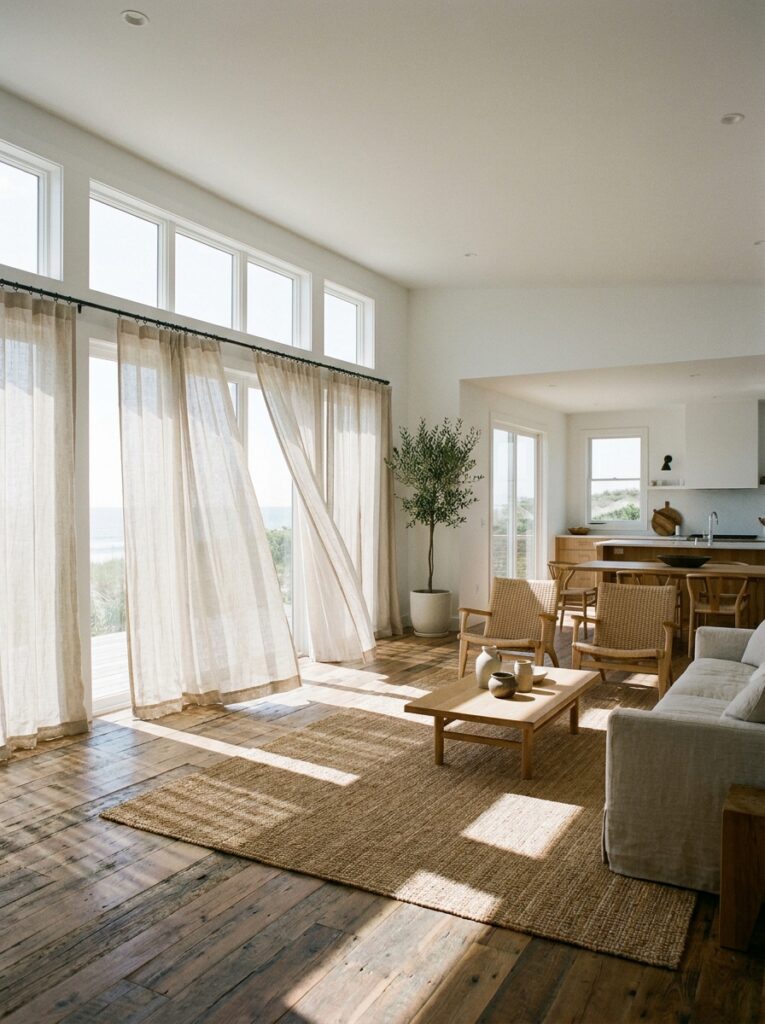
Lighting plays a major role in coastal design.
- Use light curtains or sheer fabrics
- Avoid blocking windows
- Keep window areas open
Natural light enhances the airy feel more than any decor item.
6. Limit Decor to Avoid a Themed Look
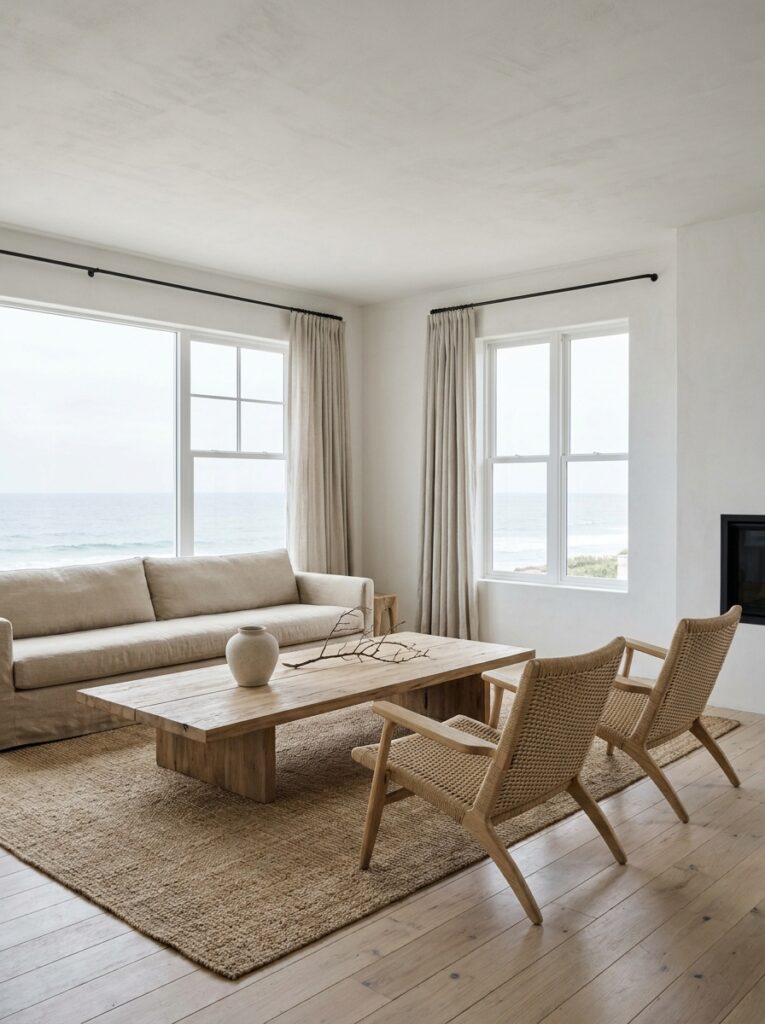
One of the biggest mistakes is over-decorating.
Avoid:
- Too many coastal symbols (anchors, shells, etc.)
- Overcrowded surfaces
Instead, keep decor minimal and intentional.
7. Use Soft Layers Instead of Bold Statements
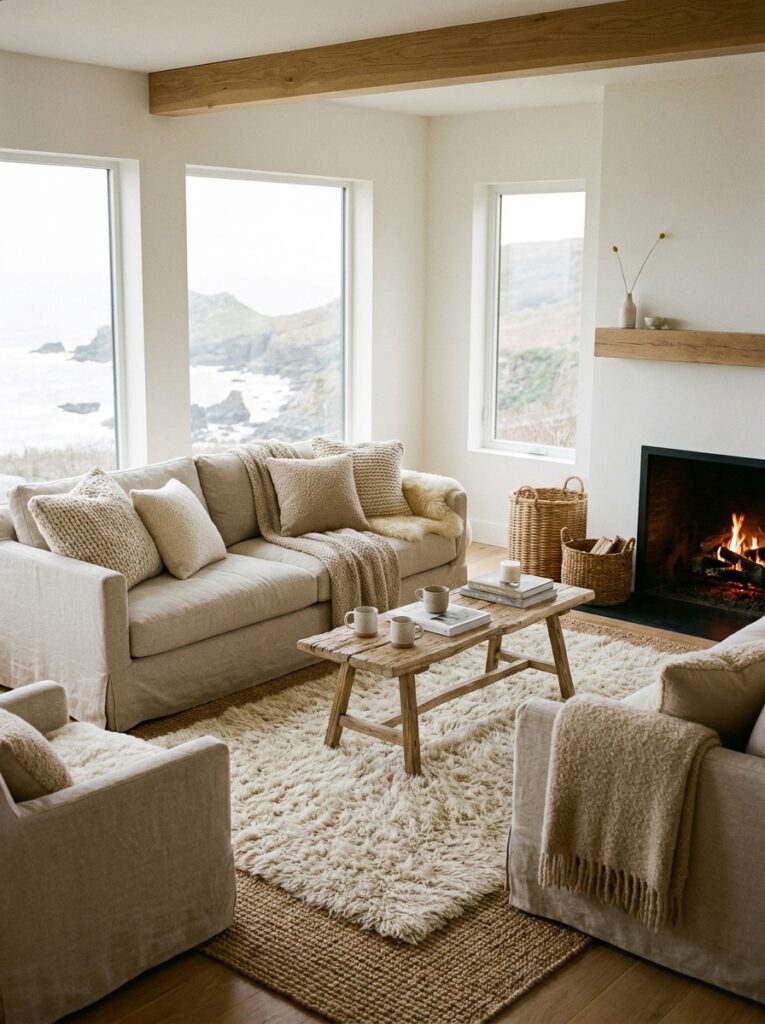
Coastal design works through layering, not contrast.
- Add a light rug
- Use soft throws and cushions
- Combine subtle textures
This creates depth without making the space feel busy.
8. Keep Surfaces Clean and Open
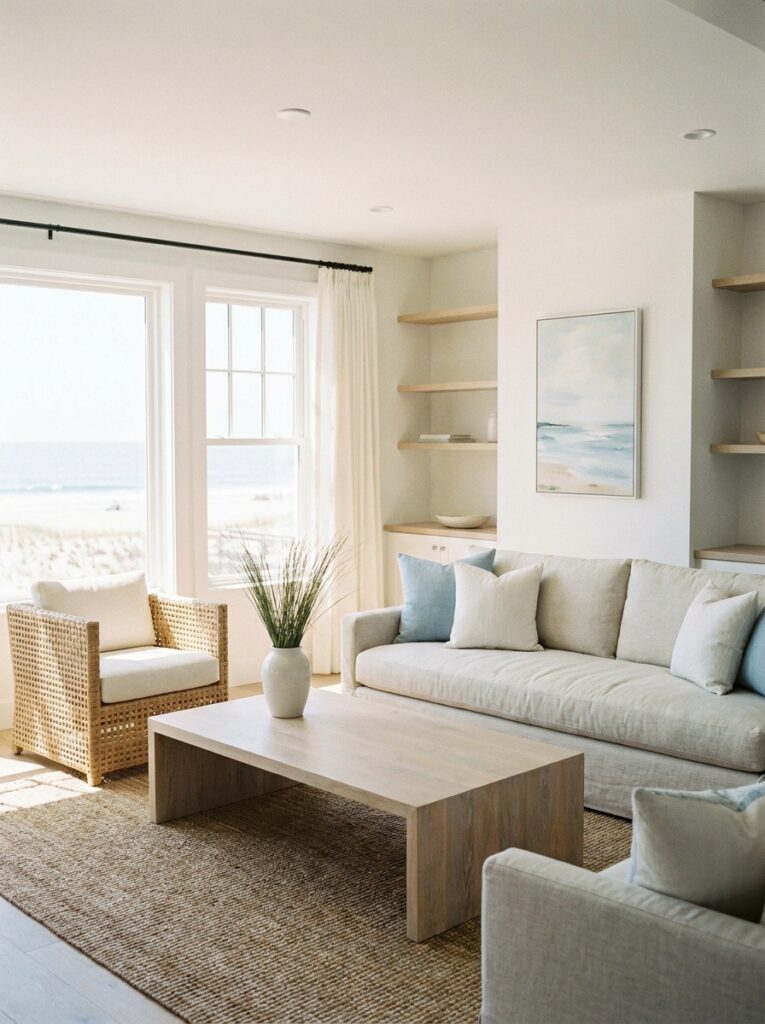
A cluttered room loses the coastal effect quickly.
- Keep coffee tables simple
- Limit shelf decor
- Leave some areas empty
Open space is a key part of the design.
9. Make It Easy to Maintain Daily
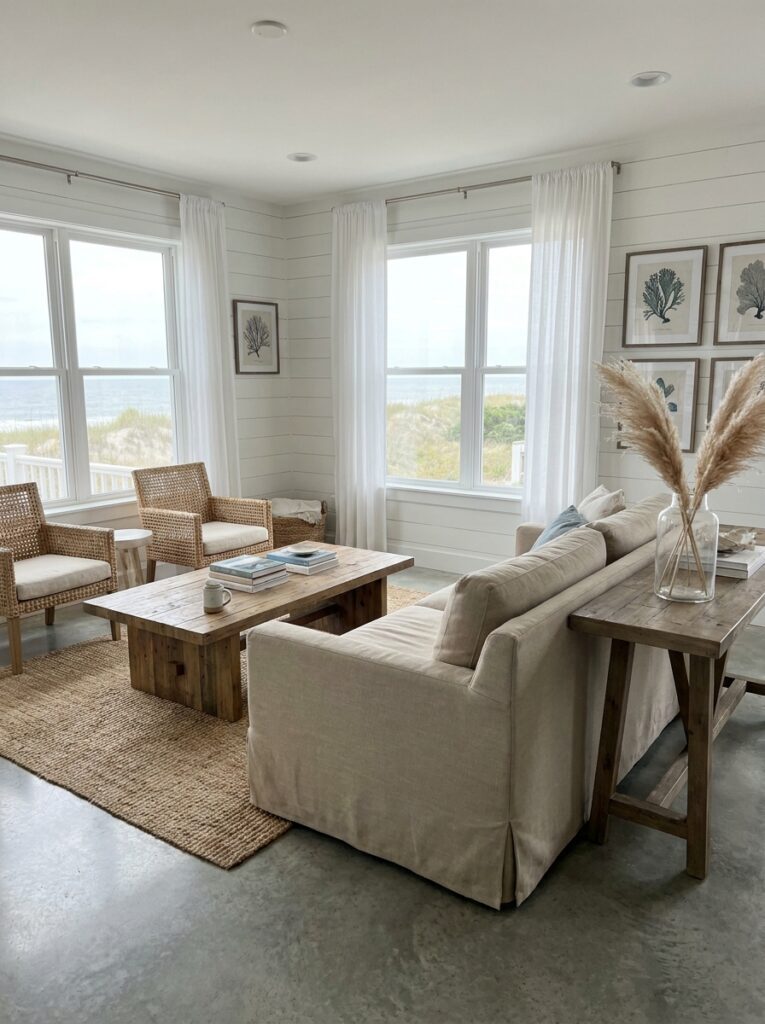
A coastal living room should feel effortless.
- Choose materials that are easy to clean
- Avoid complicated setups
- Keep decor easy to adjust
The goal is a space that looks good without constant effort.
A More Practical Way to Approach Coastal Design
Instead of trying to recreate a perfect coastal look, focus on how your living room functions day to day. A successful coastal space feels calm because it is not overloaded with elements.
By keeping the palette light, using natural textures, and maintaining open space, you create a living room that feels relaxed and usable—not staged.