
An outdoor kitchen can extend how you use your home, especially during warmer months. But many setups look good in photos and fail in daily use because they ignore layout, weather, and practicality.
A well-designed outdoor kitchen should be easy to cook in, simple to maintain, and built around how you actually use your space—not just how it looks.
1. Start with a Functional Layout, Not Just Placement
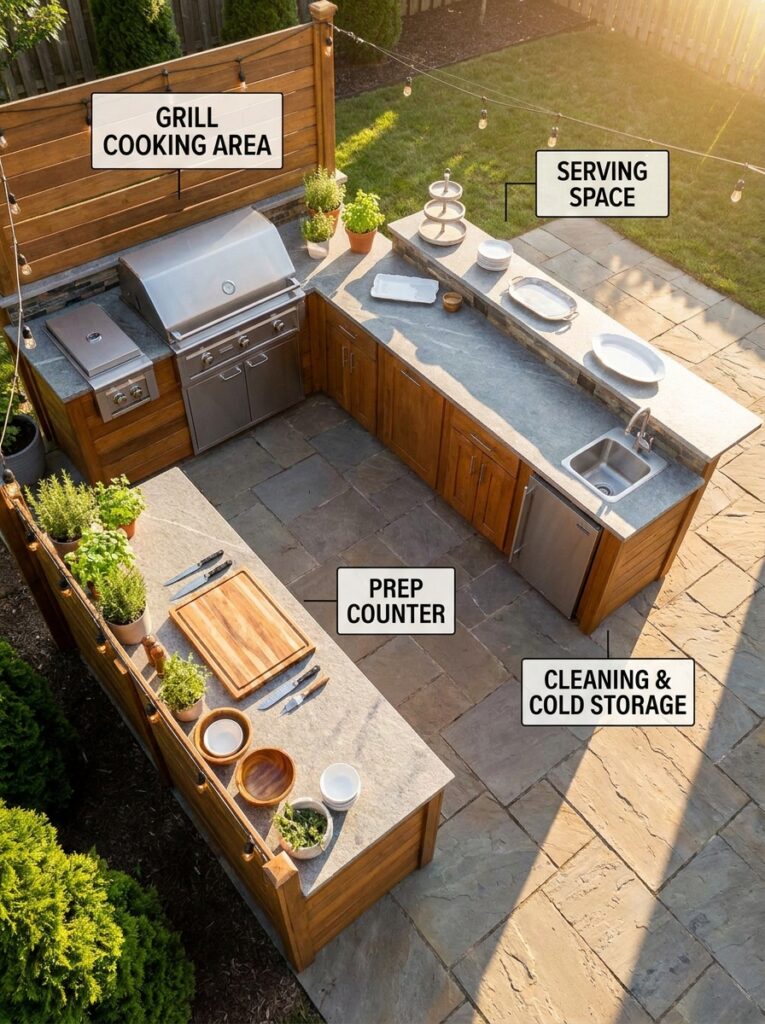
The biggest mistake is placing appliances without a plan.
Think in terms of zones:
- Prep area
- Cooking zone (grill or cooktop)
- Serving or plating space
Even in a small setup, keeping these zones close improves flow and reduces unnecessary movement.
2. Choose Materials That Handle Weather
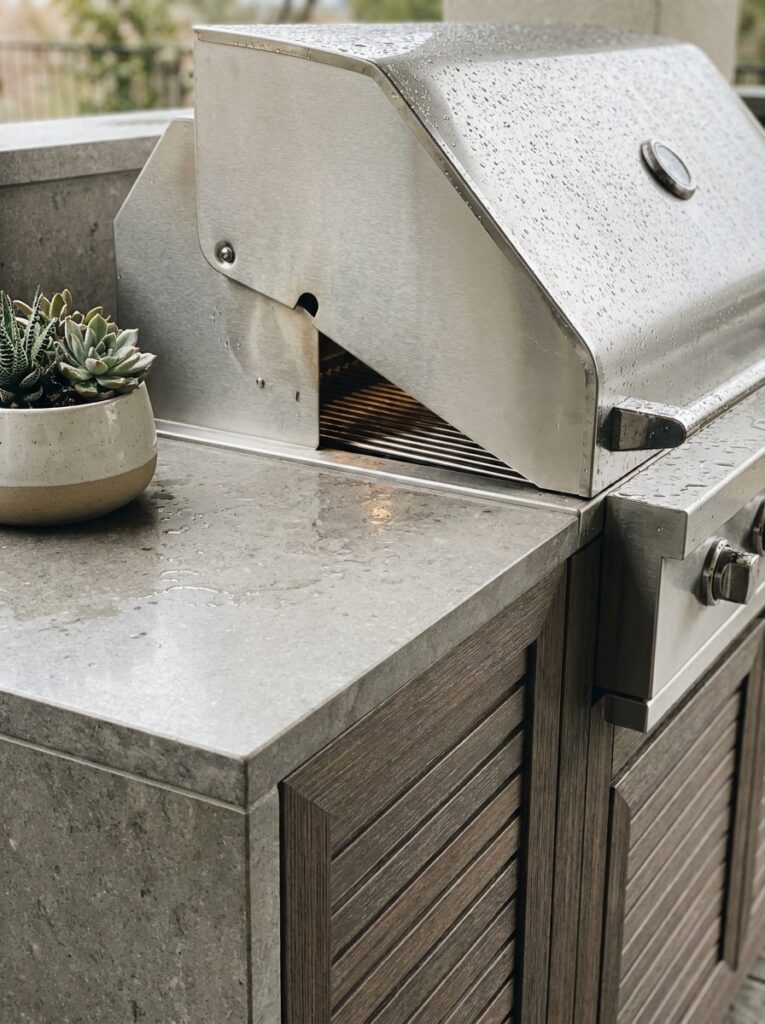
Outdoor kitchens face sun, rain, and temperature changes.
Use materials like:
- Stainless steel for appliances
- Sealed stone or concrete countertops
- Weather-resistant cabinets
Avoid materials that warp, fade, or require constant upkeep.
3. Keep It Close to the Indoor Kitchen
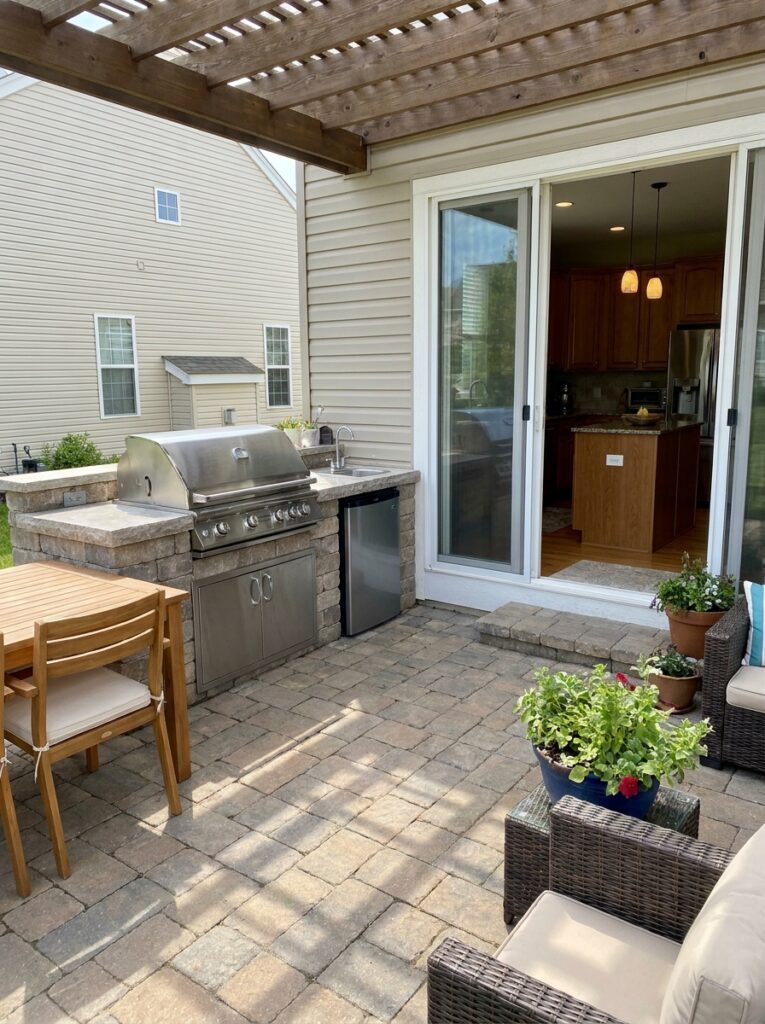
Distance matters more than people expect.
If your outdoor kitchen is too far:
- You’ll constantly walk back and forth
- Cooking becomes inconvenient
Position it within easy reach of your indoor kitchen for better usability.
4. Add Shade to Make It Usable All Day
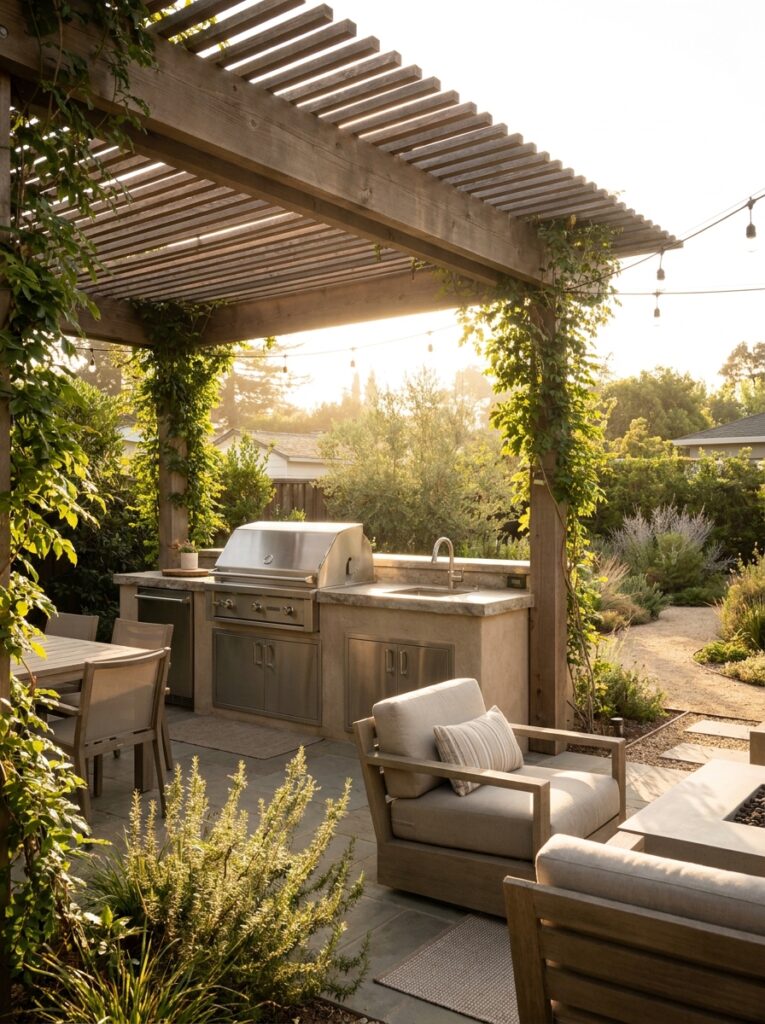
Without shade, the space becomes unusable during peak sun hours.
Options include:
- Pergolas
- Covered patios
- Large umbrellas
Shade not only improves comfort but also protects surfaces and appliances.
5. Include Storage That Actually Gets Used
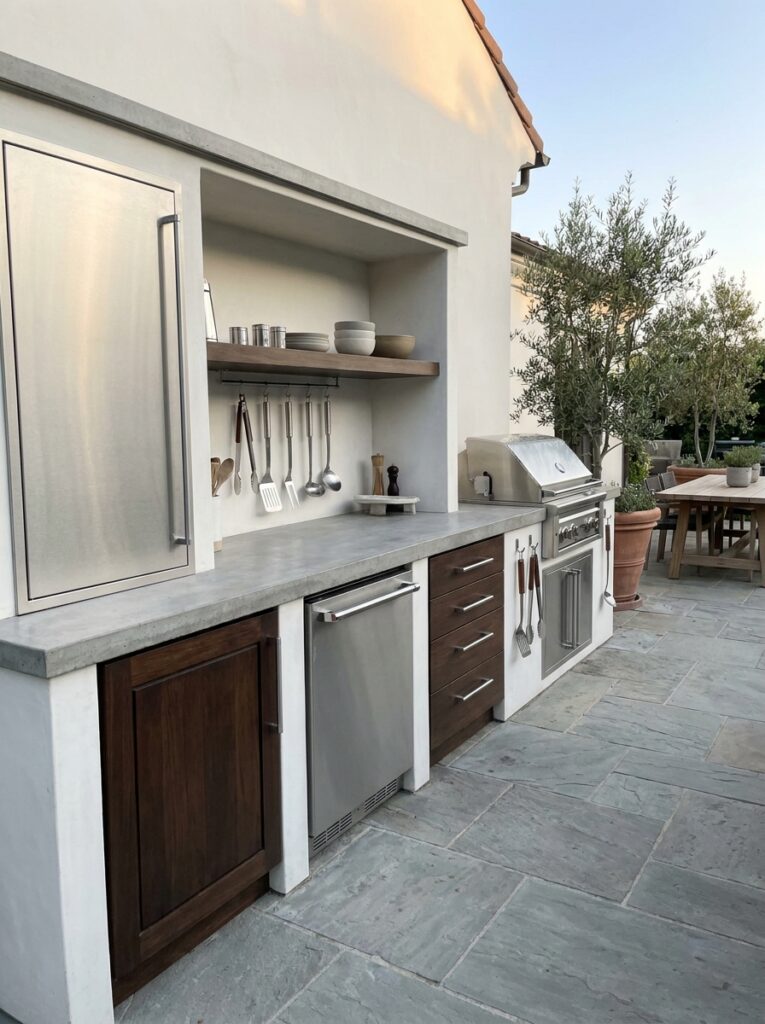
Most outdoor kitchens lack proper storage.
Add:
- Closed cabinets for tools and supplies
- Drawers for utensils
- A small section for frequently used items
This reduces trips indoors and keeps everything organized.
6. Plan Lighting for Evening Use
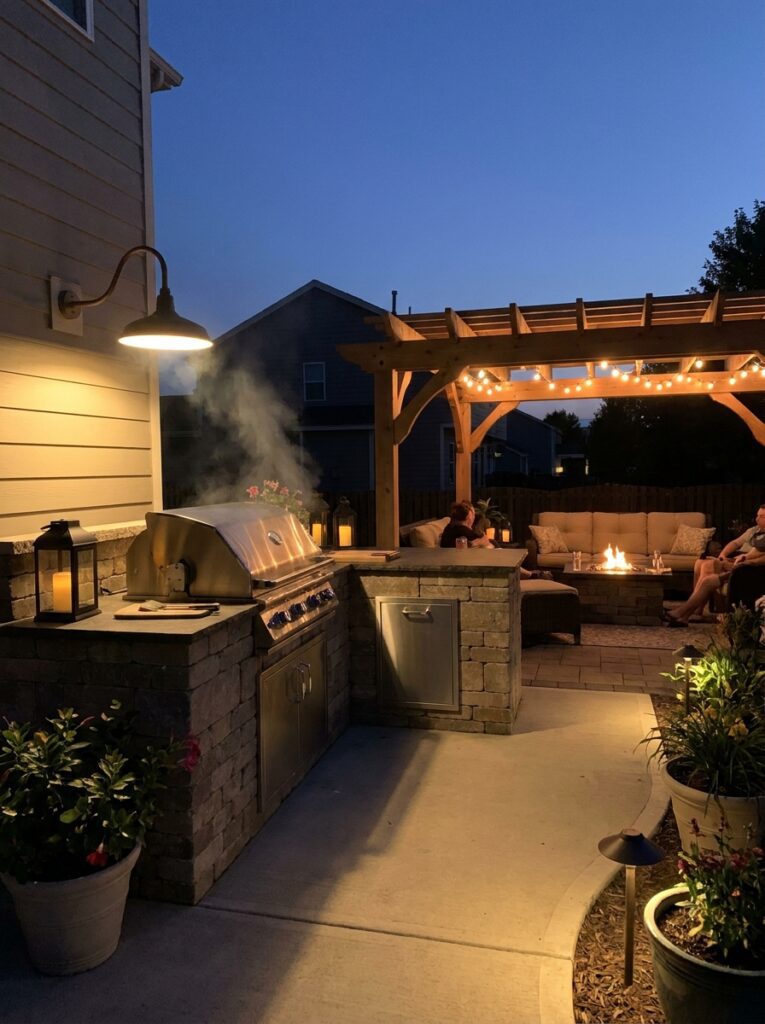
Outdoor kitchens are often used in the evening.
Good lighting should include:
- Task lighting near the grill
- Ambient lighting for the surrounding area
This makes the space safer and more comfortable after sunset.
7. Keep the Design Simple, Not Overloaded
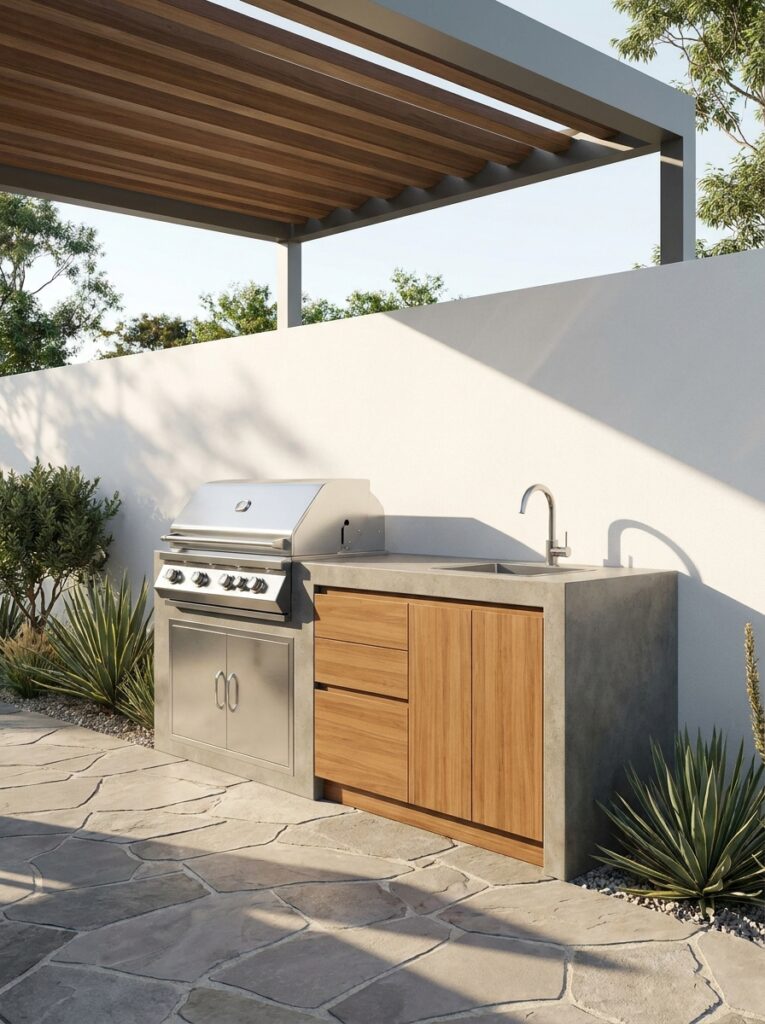
It’s easy to add too many features.
Focus on essentials first:
- Grill
- Counter space
- Storage
You can always add more later. A simple setup is easier to maintain and use.
8. Add a Small Seating Area Nearby
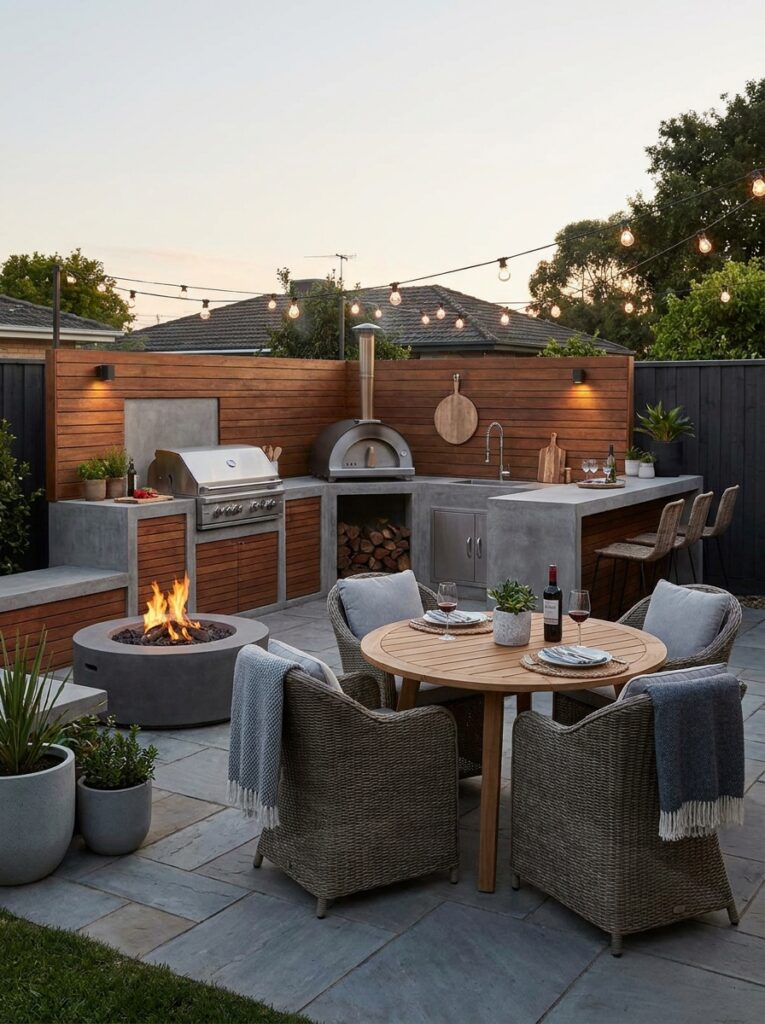
Cooking outdoors is usually a social activity.
A small seating setup:
- Keeps people nearby
- Makes the space more inviting
- Improves overall use
This doesn’t need to be large—just enough to support interaction.
9. Think About Cleaning and Maintenance Early
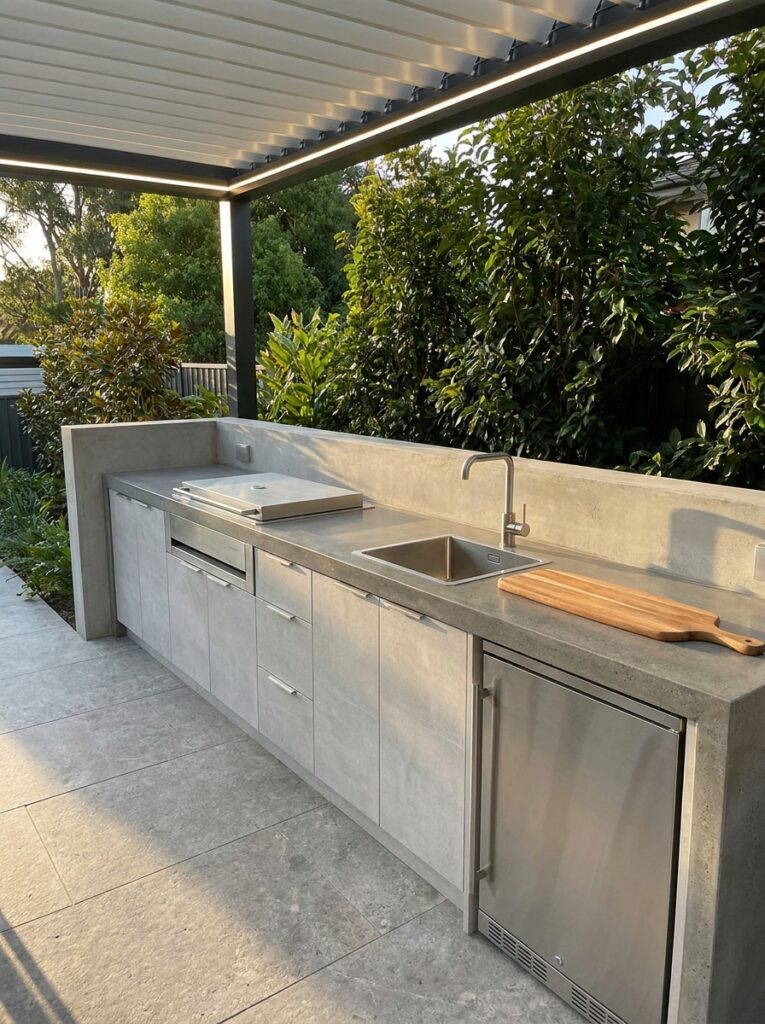
Outdoor kitchens get dirty faster than indoor ones.
Make cleaning easier by:
- Choosing smooth, wipeable surfaces
- Avoiding tight or hard-to-reach corners
- Keeping layout simple
A design that’s easy to clean will stay usable longer.
A More Practical Way to Plan an Outdoor Kitchen
Instead of trying to build a fully equipped outdoor kitchen right away, start with what you’ll actually use regularly. A grill, a small prep area, and a bit of storage can already make a big difference.
As you use the space, you’ll naturally see what’s missing. Expanding based on real needs leads to a setup that feels natural, efficient, and worth the investment—rather than something that looks good but rarely gets used.